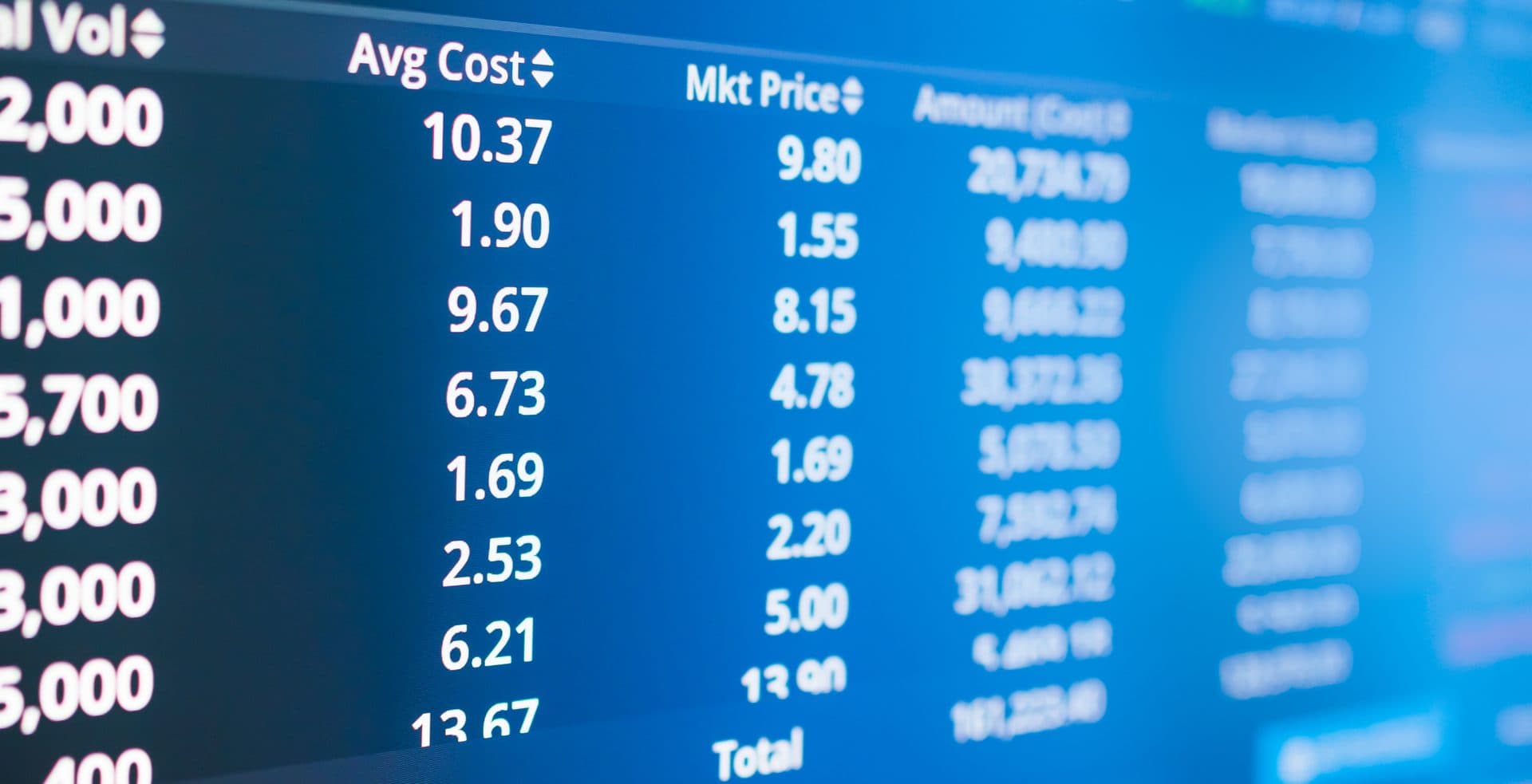
Photo by sawitchayawing
The FX spread is where your remittance business makes or loses money. Your spread is the difference between the wholesale rate you pay to source foreign currency and the customer rate you display on your rate board — and for most Australian MTOs, it accounts for 60-80% of gross revenue. Set it too wide and you lose customers to Wise or Remitly; set it too narrow, or leave positions unhedged, and a currency swing wipes out your margin before the payout clears.
This guide shows you how to calculate your true cost of FX, set competitive spreads corridor by corridor, and close the margin leaks — stale rate boards, unhedged exposure, and correspondent markups — that quietly erode profitability. If you run a small-to-mid-sized money transfer operation, mastering your FX pricing is the single highest-leverage financial discipline you can build.
Key Takeaways
- FX spread typically drives 60-80% of MTO gross revenue — larger than upfront transfer fees in most competitive corridors.
- Your true cost of FX is the wholesale mid-market rate plus your funding cost, correspondent markup, and settlement float — not just the rate your liquidity provider quotes.
- Spreads should be set per corridor, reflecting volatility, competition, and volume. A stable AUD/USD corridor supports a tighter spread than a thin AUD/PGK one.
- Unhedged open positions are the leading cause of margin erosion. A rate board left unchanged during a 1.5% intraday move can turn a profitable transaction into a loss.
- Rate board refresh discipline — automated feeds, buffer margins, and cut-off rules — protects you from the timing gap between when a customer locks a rate and when you settle.
What Is an FX Spread in Remittance?
An FX spread is the margin you build into the exchange rate you offer customers, measured against the mid-market rate. The mid-market rate — the midpoint between the global buy and sell price for a currency pair — is the "true" rate published by sources like the RBA, Reuters, or Bloomberg. It is the rate no retail customer actually gets.
When a customer sends AUD to the Philippines, you quote them a PHP rate that is worse than mid-market. The gap between the mid-market rate and your customer rate is your spread, usually expressed in basis points (bps) or as a percentage.
Example: If AUD/PHP mid-market is 37.50 and you offer your customer 36.75, your spread is:
(37.50 − 36.75) ÷ 37.50 = 2.0%, or 200 bps
On a AUD 1,000 transfer, that 2% spread earns you roughly AUD 20 in FX margin — often more than the flat fee you charge. According to the World Bank Remittance Prices Worldwide database, the global average total cost of sending USD 200 sits around 6%, with FX margin making up a large share of that in most corridors.
How to Calculate Your True Cost of FX
Your customer spread only becomes profit after you subtract your cost of FX — the all-in price you actually pay to deliver foreign currency to the beneficiary. Most operators underprice because they treat the liquidity provider's quote as their full cost. It isn't.
Your true cost of FX has four components:
| Cost component | What it is | Typical range |
|---|---|---|
| Wholesale rate margin | The spread your liquidity provider or bank charges above interbank | 10-50 bps |
| Funding cost | Cost of pre-funding nostro accounts or holding float | 5-25 bps |
| Correspondent / payout markup | Fees or FX markup from your correspondent or mobile money partner | 20-100 bps |
| Settlement float risk | Rate movement between quote and settlement | Variable |
Worked example
Suppose you send AUD to Vietnam. Your liquidity provider quotes AUD/VND at 20 bps above interbank. You pre-fund a VND account, costing 15 bps in funding. Your Vietnamese payout partner takes a 60 bps markup on their leg.
Your baseline cost of FX is 20 + 15 + 60 = 95 bps (0.95%) before you've earned a cent.
To hit a target 1.5% net FX margin on this corridor, you must set a customer spread of roughly 2.45% (0.95% cost + 1.5% target). Any spread below 0.95% loses money on every transaction — a mistake that is invisible until month-end.
Setting Competitive Spreads by Corridor
A flat spread across every currency is the fastest way to lose money on hard corridors and lose customers on easy ones. Price each corridor individually, weighing three variables: volatility, competition, and volume.
Volatility
High-volatility pairs need wider spreads to absorb rate movement during the settlement window. Major pairs like AUD/USD and AUD/EUR are deep and stable, supporting tight spreads of 50-150 bps. Thin or restricted currencies — AUD/PGK (Papua New Guinea kina), AUD/FJD, or frontier African currencies — carry higher volatility and payout friction, justifying 250-500 bps.
Competition
High-traffic corridors where Wise, Remitly, and WorldRemit compete aggressively compress spreads. On Australia to India or Australia to the Philippines, digital players advertise spreads under 100 bps, so you must price near this to win volume. On niche corridors with fewer players — parts of the Pacific or specific African routes — you retain pricing power.
Volume
High volume lets you accept a thinner spread and profit on throughput. A corridor moving AUD 2 million monthly at 80 bps generates the same FX revenue as one moving AUD 400,000 at 400 bps. Segment your rate board so your busiest corridors stay competitive while low-volume corridors carry their true cost.
Sample corridor spread matrix
| Corridor | Volatility | Competition | Suggested spread |
|---|---|---|---|
| Australia → USA (USD) | Low | High | 60-120 bps |
| Australia → India (INR) | Medium | Very high | 80-150 bps |
| Australia → Philippines (PHP) | Medium | Very high | 100-180 bps |
| Australia → Vietnam (VND) | Medium | High | 150-250 bps |
| Australia → Fiji (FJD) | Medium | Low | 250-350 bps |
| Australia → PNG (PGK) | High | Low | 350-500 bps |
These are illustrative starting points, not fixed recommendations. Validate against your own cost of FX and live competitor pricing before publishing.
The Margin Killers: Where MTOs Lose Money
Even with correct pricing, three operational failures erode margin. Each is preventable.
1. Unhedged open positions
The moment a customer locks a rate, you hold an open FX position — you've promised to deliver foreign currency at a fixed rate but haven't yet sourced it. If the rate moves against you before you settle, your margin shrinks or vanishes.
Example: A customer locks AUD/USD at 0.6650 for a AUD 50,000 transfer. Before you buy the USD, AUD/USD falls to 0.6550 — a 1.5% move. You now pay more AUD to deliver the same USD, converting a AUD 500 expected margin into a AUD 250 loss.
The fix is hedging: buy the currency the moment you lock the rate, or net your positions and hedge the aggregate exposure with a forward contract or spot purchase at day's end. Small MTOs often use back-to-back settlement — buying the exact currency amount from their liquidity provider immediately after each locked transaction — to eliminate open exposure.
2. Stale rate boards
A rate board left unrefreshed during market moves is a direct invitation to arbitrage and loss. If AUD strengthens 1% and your board still shows yesterday's rate, sharp customers (or agents) will send large transactions against the stale, favourable rate — at your expense.
Refresh rates automatically from a live feed, and apply a buffer margin that absorbs intraday movement between refreshes. The tighter your refresh cycle, the smaller the buffer you need.
3. Correspondent and payout markups
Many operators underestimate what their payout partners charge on the receiving leg. A mobile money partner taking an undisclosed 80 bps on the local currency conversion silently halves your margin. Audit your correspondent agreements, demand transparent FX terms, and factor the full delivered cost into your spread.
Building a Rate Board That Protects Margin
Your rate board is your pricing engine. Build it with these disciplines:
- Automated live feed. Source mid-market rates from a reliable provider (your liquidity partner's API, or a market data feed) and refresh at least every few minutes for major pairs, more frequently in volatile conditions.
- Corridor-specific spread rules. Apply your calculated spread per corridor, not a global figure.
- Volatility buffer. Add a dynamic buffer that widens automatically when a pair's intraday volatility spikes.
- Rate lock and cut-off rules. Define how long a quoted rate is valid (for example, 15 minutes for online quotes) and set a daily cut-off after which same-day settlement isn't guaranteed.
- Tiered pricing by amount. Offer tighter spreads on larger transfers to compete for high-value corridors while protecting margin on small transactions.
A well-configured rate board turns FX pricing from a manual, error-prone task into an automated margin-protection system. Explore our rate board tool to model corridor spreads and buffers.
Balancing Competitiveness and Profitability
The strategic tension in FX pricing is simple: too wide and you lose customers, too narrow and you lose money. Winning operators resolve it with corridor segmentation and transparency.
Lead with your competitive corridors — the high-volume, high-competition routes where a tight spread wins volume — and cross-subsidise with wider spreads on niche corridors where you hold pricing power. Publish your total cost clearly, because customers increasingly compare all-in rates using tools modelled on the World Bank Remittance Prices Worldwide methodology.
Remember that FX margin is only one revenue lever. Combining a modest transfer fee with a competitive spread often outperforms a zero-fee, wide-spread model, because customers anchor on the headline fee. Model both structures against your cost base before committing. Our pricing strategy guide walks through fee-versus-spread scenarios in detail.
Monitoring and Adjusting Your Spreads
FX pricing is not set-and-forget. Review these metrics monthly:
- Realised FX margin per corridor — actual margin earned after all costs, versus target.
- Win rate — how often quotes convert to transactions, indicating whether spreads are competitive.
- Open position exposure — the value of unhedged commitments at any point.
- Rate board slippage — the gap between quoted and settled rates, exposing stale-board losses.
Where realised margin trails target, investigate whether the culprit is an underpriced spread, a rising correspondent markup, or hedging failures. Adjust the specific lever rather than blanket-widening every spread.
Compliance Considerations
While FX pricing is a commercial decision, your AML/CTF program must still govern the transactions behind it. Large FX conversions and structured transfers designed to exploit rate movements can trigger reporting obligations under the AML/CTF Act 2006, including Threshold Transaction Reports and Suspicious Matter Reports where behaviour suggests structuring or market manipulation.
AUSTRAC expects reporting entities to price transparently and to monitor for transactions that deviate from a customer's expected profile. Unusually large FX conversions from a low-risk customer warrant review under your transaction monitoring rules. Keep your AML/CTF program aligned with your commercial pricing practices.
This information is general in nature and does not constitute legal advice. Consult AUSTRAC or a qualified legal professional for advice specific to your situation.
Frequently Asked Questions
What is a good FX spread for a remittance business?
A competitive FX spread depends entirely on the corridor. On high-volume, high-competition corridors like Australia to India or the Philippines, spreads of 80-180 bps are typical among established operators. On thin or volatile corridors like Australia to PNG, spreads of 350-500 bps are justified by higher costs and volatility. Always calculate your true cost of FX first, then set the spread above it to hit your target margin.
How do I calculate my cost of FX?
Your cost of FX is the sum of four components: the wholesale rate margin your liquidity provider charges above interbank, your funding cost for holding float or pre-funded accounts, the correspondent or payout partner's markup on the receiving leg, and any settlement float risk from rate movement between quote and settlement. Add these together to find the baseline cost you must price above.
What is an unhedged FX position and why is it risky?
An unhedged open position exists when you've locked a rate for a customer but haven't yet purchased the foreign currency to deliver. If the exchange rate moves against you before settlement, your margin shrinks or turns into a loss. Small MTOs typically manage this with back-to-back settlement — buying the exact currency immediately after each locked transaction — or by netting and hedging aggregate exposure with forwards.
How often should I refresh my rate board?
Refresh major currency pairs at least every few minutes during market hours, and more frequently during volatile conditions. Pair automated refreshing with a volatility buffer margin that absorbs intraday movement between updates. A stale rate board exposes you to arbitrage, where customers send large transactions against an outdated favourable rate at your expense.
Does FX margin trigger AUSTRAC reporting obligations?
FX margin itself is a commercial matter, but the transactions behind it are subject to your AML/CTF obligations. Transfers of AUD 10,000 or more require a Threshold Transaction Report, and any transaction suggesting structuring or manipulation may require a Suspicious Matter Report under the AML/CTF Act 2006. Your transaction monitoring should flag unusually large FX conversions that deviate from a customer's expected profile.
Take Control of Your FX Pricing
FX spread discipline separates profitable MTOs from those that operate on thin, unpredictable margins. Calculate your true cost of FX per corridor, set spreads that balance competitiveness with profitability, and close the leaks from unhedged positions and stale rate boards.
Start by modelling your corridor spreads with our rate board tool, review corridor-specific dynamics in our corridor guides, and subscribe to the Australia Remittance newsletter for ongoing pricing and compliance insight tailored to Australian operators.