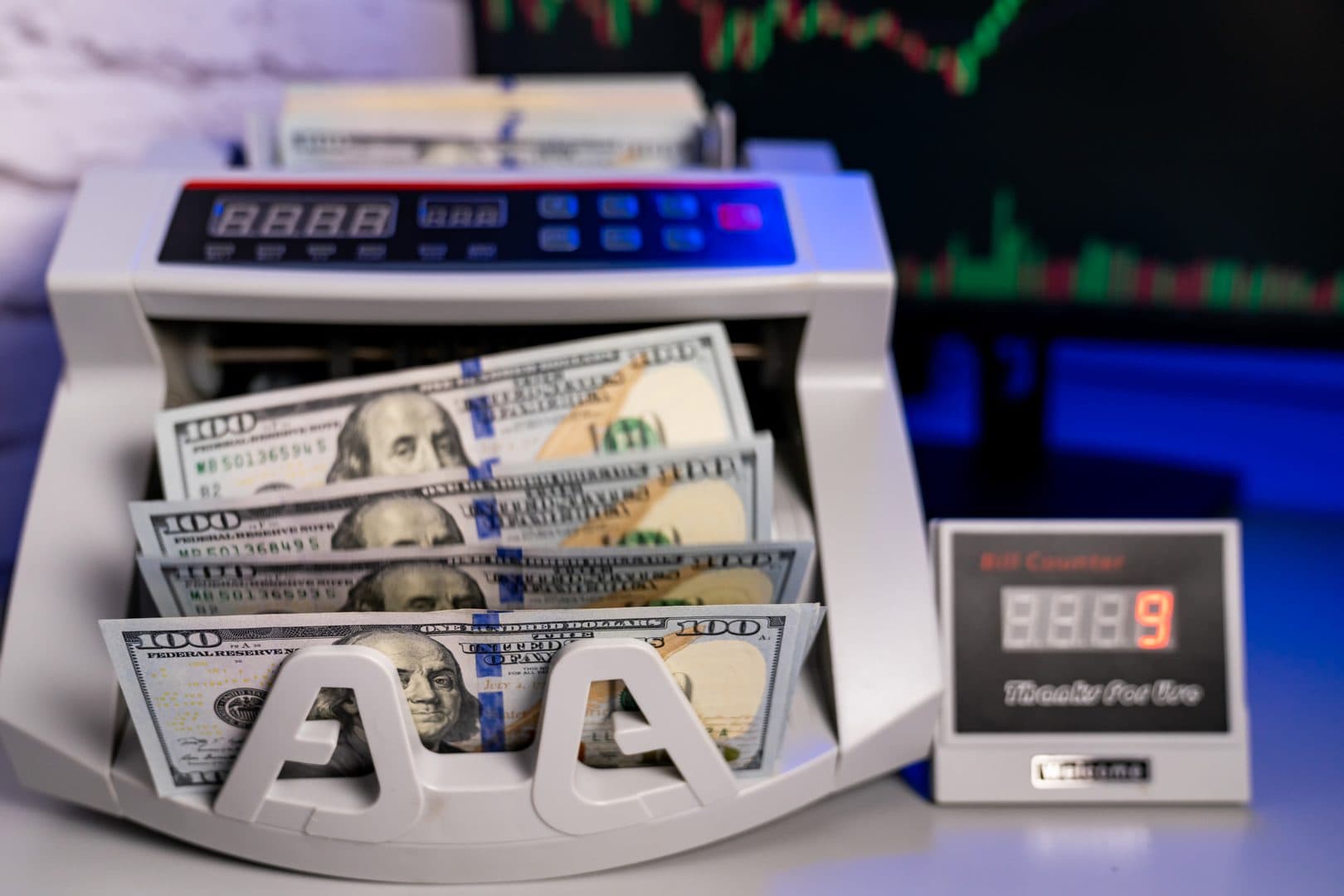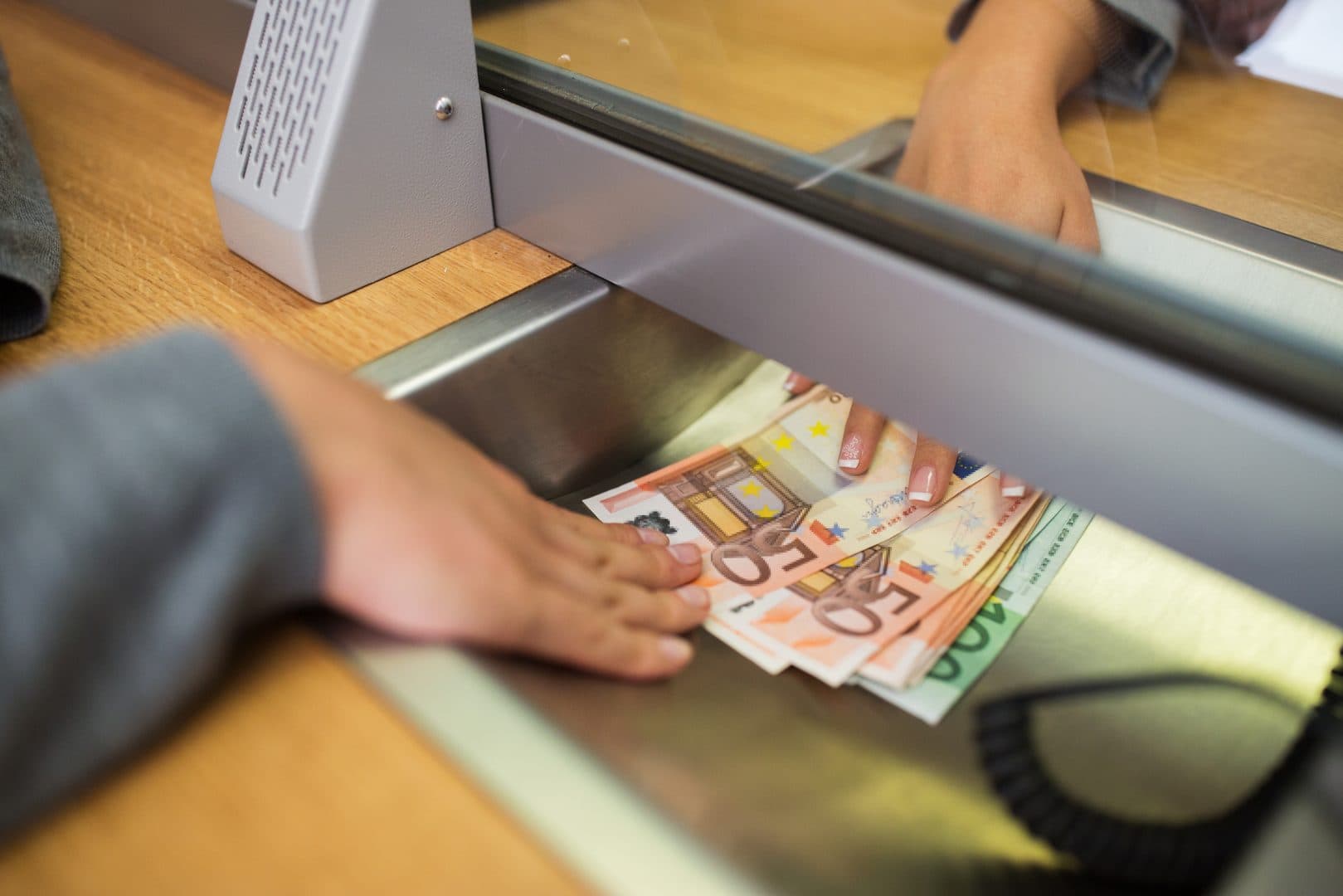
Photo by syda_productions
Under Australian AML/CTF law, a significant cash transaction is any physical currency transaction of AUD 10,000 or more (or the foreign currency equivalent) that you must report to AUSTRAC as a Threshold Transaction Report (TTR) within 10 business days. The reporting trigger hinges on one word — physical — and that single word is where most remittance operators get it wrong.
Cash means banknotes and coins. It does not mean electronic funds, bank transfers, or card payments, no matter how large. A customer who wires you AUD 50,000 through their bank account has not triggered a TTR. A customer who hands you AUD 10,000 in AUD 50 notes has. Understanding this distinction — and the aggregation and currency-conversion rules that sit alongside it — determines whether your reporting is defensible under an AUSTRAC examination.
Key Takeaways
- A significant (threshold) cash transaction is physical currency of AUD 10,000 or more, reported via a TTR within 10 business days.
- Only physical currency counts — banknotes and coins. Electronic transfers, cheques, EFTPOS, and card payments do not trigger a TTR.
- Foreign currency is converted to AUD using the exchange rate at the time of the transaction to test the threshold.
- Aggregation rules apply: structuring multiple sub-threshold cash deposits to dodge the limit is an offence, and genuinely linked transactions can require reporting even below AUD 10,000.
- Deliberately structuring transactions to avoid reporting is a separate criminal offence under the AML/CTF Act 2006, carrying penalties regardless of whether the funds are illicit.
What Is a Significant Cash Transaction Under AUSTRAC Rules?
A significant cash transaction — the term AUSTRAC formally uses is threshold transaction — is a transfer of physical currency of AUD 10,000 or more, or the foreign-currency equivalent, in the course of providing a designated service.
The obligation sits in the Anti-Money Laundering and Counter-Terrorism Financing Act 2006 (AML/CTF Act). When a threshold transaction occurs, you must lodge a Threshold Transaction Report (TTR) with AUSTRAC through AUSTRAC Online within 10 business days.
For remittance operators, the triggering designated services usually involve accepting physical cash from a customer to remit abroad, or paying out physical cash to a beneficiary. If cash crosses the counter at AUD 10,000 or above in connection with your remittance service, the TTR clock starts.
AUSTRAC reports that reporting entities lodge millions of threshold transaction reports each year, and TTR data feeds directly into Australia's financial intelligence picture alongside IFTIs and suspicious matter reports. Accurate, timely TTRs are a baseline expectation — not an optional extra.
What Counts as "Cash"? Physical Currency Defined
The single most important concept in threshold reporting is that "cash" means physical currency — banknotes and coins that are legal tender, whether Australian or foreign.
The AML/CTF Act defines physical currency as the coin and printed money of Australia or a foreign country that is designated as legal tender and circulates as a medium of exchange. That is the test. If a payment method is not banknotes or coins, it is not a threshold transaction — even if the amount is enormous.
Payment methods that DO count
| Payment method | Counts as cash? | Why |
|---|---|---|
| Australian banknotes and coins | Yes | Physical currency, legal tender |
| Foreign banknotes and coins | Yes | Converted to AUD to test threshold |
| Cash handed over the counter to send a remittance | Yes | Physical currency received |
| Physical cash paid out to a beneficiary | Yes | Physical currency disbursed |
Payment methods that do NOT count
| Payment method | Counts as cash? | Why |
|---|---|---|
| Bank transfer / direct deposit | No | Electronic funds, not physical currency |
| EFTPOS or card payment | No | Electronic value transfer |
| Cheque or bank draft | No | Negotiable instrument, not physical currency |
| PayID / PayTo / NPP transfer | No | Electronic funds |
| Cryptocurrency or stablecoin | No | Digital value — not physical currency (reportable under other rules) |
The practical upshot: a customer who transfers AUD 80,000 into your settlement account by bank transfer has not triggered a TTR. A customer who deposits AUD 10,000 in cash at your shopfront has. The dollar amount is secondary to the form of the money.
Cash Equivalents and Negotiable Instruments: The Grey Zone
Many operators assume a bank cheque, money order, or bearer negotiable instrument counts as cash for TTR purposes. It does not.
These instruments are not physical currency, so they fall outside the threshold transaction definition. A customer presenting an AUD 15,000 bank cheque does not trigger a TTR.
That does not mean they are irrelevant. Large or unusual cheques, money orders, or bearer instruments can still demand attention under two other obligations:
- Suspicious Matter Reports (SMRs): if the instrument, customer behaviour, or source of funds raises reasonable grounds for suspicion, you must lodge an SMR regardless of amount.
- Cross-border movements of bearer negotiable instruments: physically carrying such instruments across the Australian border attracts separate reporting rules administered by AUSTRAC and the Australian Border Force.
Treat cash equivalents as a risk signal to assess, not a TTR trigger to report. Your AML/CTF program should set clear staff guidance distinguishing the two.
Foreign Currency: Converting to Test the AUD 10,000 Threshold
The threshold is AUD 10,000 — but cash often arrives in US dollars, euros, Chinese yuan, or Pacific currencies. You must convert foreign physical currency to AUD to test whether the threshold is met.
AUSTRAC expects you to use the exchange rate applicable at the time of the transaction. The practical approach is to apply the rate you actually use for the transaction, or a reputable published rate such as the Reserve Bank of Australia (RBA) reference rate for that day.
Worked example
A customer brings USD 7,000 in banknotes to remit to the Philippines. Assume the prevailing rate is 1 USD = 1.52 AUD.
- USD 7,000 × 1.52 = AUD 10,640
Because the converted value is AUD 10,000 or more, this is a threshold transaction and a TTR is required — even though the face value in US dollars is well below 10,000.
The reverse is also true. EUR 6,000 at 1 EUR = 1.62 AUD converts to AUD 9,720 — below the threshold, so no TTR arises from that single transaction. Record your conversion rate and methodology so the figure is reproducible if AUSTRAC reviews the file.
Aggregation: When Multiple Transactions Combine
Aggregation is where operators most often under-report. The threshold applies not only to a single lump sum but to linked transactions that together reach AUD 10,000 in physical currency.
AUSTRAC guidance makes clear you cannot ignore the reality that several smaller cash transactions may form part of a single arrangement. If a customer splits a payment into three AUD 4,000 cash instalments across a morning to send the same remittance, the substance is a AUD 12,000 cash transaction.
How to approach aggregation
- Look at the economic substance, not just the receipt count. Are the transactions part of one remittance or one arrangement?
- Monitor same-day, same-customer activity across your branches and agents. Your transaction monitoring system should flag cash that approaches the threshold in aggregate.
- Document the decision either way. If you conclude transactions are genuinely unrelated, record why. If they aggregate, lodge the TTR.
Systems matter here. Manual counter staff rarely spot aggregation across sites. Automated monitoring that sums cash by customer and by day gives you a defensible control.
Structuring: The Offence of Splitting to Avoid Reporting
Structuring is the deliberate splitting of cash transactions to keep each below AUD 10,000 and avoid triggering a TTR. It is a criminal offence under the AML/CTF Act — independent of whether the underlying money is clean or dirty.
A customer who insists on sending AUD 9,500 today and AUD 9,500 tomorrow "to stay under the limit" is describing structuring. So is a customer who asks you to break a AUD 18,000 cash deposit into two visits.
Your obligations when you detect possible structuring:
- Do not assist the customer to structure. Facilitating structuring exposes your business and staff to prosecution.
- Lodge a Suspicious Matter Report (SMR), because deliberate structuring behaviour is a reasonable ground to suspect an offence.
- Train frontline staff to recognise the red flags — requests to split amounts, reluctance to provide ID, questions about reporting thresholds, and repeated near-threshold cash activity.
AUSTRAC treats structuring as a serious indicator and enforcement priority. Operators who tolerate or facilitate it risk civil penalties, criminal exposure, and cancellation of registration.
TTR Exemptions and Exclusions for Remittance Operators
There is no general "small business" exemption from threshold reporting. If you provide a designated service and receive AUD 10,000+ in physical currency, the TTR obligation applies.
That said, several situations fall outside the TTR net:
- Non-cash transactions of any size. As covered above, electronic transfers, cheques, and card payments never trigger a TTR.
- Transactions below AUD 10,000 that do not aggregate and raise no suspicion. These are not threshold transactions — though you still retain records and monitor for patterns.
- Services that are not designated services. If a transaction does not fall within a designated service under the Act, the TTR framework does not reach it.
AUSTRAC also publishes specific and class exemptions from time to time under the AML/CTF Rules. These are narrow and conditional — do not assume one applies to your business without confirming the exact terms. If you believe an exemption is relevant, obtain it in writing and record the basis in your AML/CTF program.
How to Lodge a TTR: Process and Deadlines
Once a threshold transaction occurs, lodging the TTR is a structured process through AUSTRAC Online.
- Identify the trigger. Confirm the transaction is physical currency of AUD 10,000 or more (including converted foreign currency and aggregated amounts).
- Collect the required data. This includes customer identification details, the amount and currency, the designated service provided, and transaction date and location.
- Lodge within 10 business days of the transaction through AUSTRAC Online. Late lodgement is a compliance breach.
- Retain records for seven years, as required under the AML/CTF Act record-keeping provisions.
Accuracy counts as much as timeliness. Incomplete or inconsistent TTRs undermine the quality of AUSTRAC's intelligence and invite scrutiny of your wider program.
TTR vs IFTI vs SMR: Knowing Which Report Applies
Remittance operators juggle three core report types. Confusing them is a common examination finding.
| Report | Trigger | Deadline |
|---|---|---|
| TTR (Threshold Transaction Report) | Physical currency of AUD 10,000+ | 10 business days |
| IFTI (International Funds Transfer Instruction) | Instruction to transfer funds into or out of Australia, any amount | 10 business days |
| SMR (Suspicious Matter Report) | Reasonable grounds to suspect an offence, any amount or method | 3 business days (24 hours for terrorism financing) |
A single transaction can trigger more than one report. A customer who pays AUD 12,000 cash to send money overseas and behaves suspiciously could generate a TTR, an IFTI, and an SMR for the same transaction. Each obligation stands on its own.
Common Mistakes MTOs Make with Cash Reporting
From AUSTRAC enforcement patterns and industry experience, these errors recur:
- Treating cheques and bank drafts as cash and lodging unnecessary TTRs, or conversely treating cash as "just a deposit" and missing TTRs.
- Failing to convert foreign currency and so missing transactions that cross AUD 10,000 once converted.
- Ignoring aggregation across branches, agents, or the same day.
- Lodging late — missing the 10-business-day window because no one owned the task.
- Facilitating structuring by accommodating customer requests to split amounts.
- Poor record-keeping that cannot reconstruct why a TTR was or was not lodged.
A well-designed AML/CTF program with clear counter procedures, automated aggregation monitoring, and defined reporting ownership eliminates most of these.
FAQ
Does a bank transfer of AUD 10,000 or more require a TTR?
No. A TTR is triggered only by physical currency — banknotes and coins. A bank transfer, PayID payment, or EFTPOS transaction is electronic value, so it does not trigger a threshold transaction report regardless of the amount. It may still be reportable as an IFTI if it moves funds across the Australian border, and as an SMR if it raises suspicion.
How do I calculate the AUD 10,000 threshold for foreign cash?
Convert the foreign physical currency to Australian dollars using the exchange rate applicable at the time of the transaction — the rate you use for the deal or a reputable published rate such as the RBA reference rate. If the converted value is AUD 10,000 or more, lodge a TTR. Record the rate and method used so the calculation is reproducible.
Is a bank cheque or money order a cash transaction?
No. Bank cheques, money orders, and bearer negotiable instruments are not physical currency, so they do not trigger a TTR even above AUD 10,000. However, large or unusual instruments may warrant a Suspicious Matter Report, and physically carrying bearer negotiable instruments across the border has its own reporting rules.
What happens if a customer asks to split a cash payment to stay under AUD 10,000?
That is a structuring red flag. Structuring to avoid reporting is a criminal offence under the AML/CTF Act 2006. Do not help the customer split the transaction, lodge a Suspicious Matter Report, and record your decision. Aggregated linked cash transactions reaching AUD 10,000 still require a TTR.
How long do I have to lodge a TTR with AUSTRAC?
You must lodge a Threshold Transaction Report through AUSTRAC Online within 10 business days of the transaction. Retain all supporting records for seven years under the Act's record-keeping obligations.
Getting Your Cash Reporting Right
Threshold reporting rewards precision. The rule is narrow — physical currency of AUD 10,000 or more — but the edges around foreign conversion, aggregation, and structuring are where compliance programs succeed or fail.
Build the logic into your systems: automatic currency conversion at the counter, same-day same-customer aggregation flags, and a defined owner for the 10-business-day lodgement. Then document every judgement call so an AUSTRAC examiner can follow your reasoning.
Tighten your reporting controls by reviewing your AML/CTF program template, and explore our corridor guides for currency-specific cash and settlement considerations.
This information is general in nature and does not constitute legal advice. Consult AUSTRAC or a qualified legal professional for advice specific to your situation.